
Different Symptoms Can Be Different Pieces of the Same Problem.
Jaw pain, headaches, facial pain, clicking, poor sleep, and other symptoms can persist when treatment addresses where you hurt without fully identifying what is contributing to the problem.
Most patients who come to the TMJ & Sleep Therapy Centre of Temecula have already tried to get better. They may have seen dentists, physicians, physical therapists, chiropractors, neurologists, ENTs, sleep doctors, or pain specialists. They may have tried nightguards, Botox, physical therapy, medication, injections, CPAP, or other treatments. Some helped temporarily. Others did very little.
Dr. Nathan Jergensen focuses on TMJ disorders, orofacial pain, and obstructive sleep apnea, particularly in patients whose symptoms have persisted despite previous care. Rather than assuming the location of a symptom identifies its cause, he evaluates the structures and systems that may be contributing to the problem.
You do not need another treatment chosen because it usually works for someone with your symptoms. You need to understand what is happening in your body and how to fix it.
If You Have Already Tried to Fix This, You Are in the Right Place.
Complex pain rarely arrives as one perfectly isolated symptom. You may be dealing with jaw pain or soreness, clicking or locking, headaches, facial pain, ear symptoms, neck and shoulder tension, numbness or tingling, changes in your bite, or difficulty chewing. Sleep-related concerns may include snoring, morning headaches, dry mouth, daytime fatigue, brain fog, or a CPAP you know you should be using but cannot consistently tolerate. For many patients, several of these symptoms occur together, even when they have been treated separately in the past. You do not need to know which diagnosis connects them before coming in. Determining what is happening, and what may be contributing to it, is the purpose of the examination.
You Tried the Treatment. The Symptoms Came Back. Why?
A nightguard can protect teeth from grinding. Physical therapy can improve mobility and muscular function. Botox can reduce muscle activity. Medication can reduce pain. Injections, chiropractic care, and other therapies can also have appropriate roles. If something helped you, even temporarily, that information matters. But when the same symptoms keep returning, another question needs to be asked: was the treatment addressing the primary condition, or was it helping one consequence of it?
Dr. Jergensen’s approach is not built around criticizing the treatments you have already tried. It is built around gathering information that may not have been part of those previous evaluations. He looks at the jaw joints, muscles, bite, airway, nerves, craniofacial structures, and your history together before determining what treatment, if any, makes sense.
Different Treatment Starts With a Different Diagnosis.
The reason to pursue another evaluation is not simply to try something else. It is to understand why previous approaches may not have produced lasting results and determine whether something important has not yet been identified.
When the Problem Goes Beyond “My Jaw Hurts.”
TMJ disorders can involve the jaw joints, muscles, bite, and surrounding structures, producing symptoms that extend well beyond the joint itself. Jaw pain, clicking, locking, headaches, facial pain, ear symptoms, neck tension, difficulty chewing, and changes in the bite may occur individually or together.
Two patients can describe nearly identical symptoms while having very different clinical findings. That is why Dr. Jergensen does not treat “TMJ” as one condition with one standard solution. Treatment begins by determining which structures are involved and what the diagnostic information actually shows.
Jaw Pain Should Not Decide What You Eat.
If biting into an apple, chewing a steak, opening wide, yawning, or simply getting through a meal has become something you have to think about, your jaw deserves a closer look. Jaw pain may involve the joint, surrounding muscles, or several structures working together. Some patients wake with soreness. Others experience facial tenderness, fatigue while chewing, or pain every time they open wide.
The purpose of an evaluation is not to confirm that your jaw hurts. You already know that. It is to determine what may be making it hurt and why the problem has continued.
A Clicking Jaw May Not Hurt. That Does Not Mean Nothing Is Happening.
Clicking and popping can occur when structures inside the jaw joint are not moving normally. In some patients, the sound remains relatively subtle and not something they feel they need to address immediately. In others, it may be accompanied by pain, catching, difficulty opening, locking, disc instability, or changes within the joint.
The important question is not simply whether your jaw makes noise. It is what is producing that noise and whether the joint is functioning normally.
When the Joint Changes, the Bite Can Change With It.
Arthritis, joint degeneration, disc instability, condylar resorption, and other structural changes can affect more than comfort. Because the TMJ influences how the lower jaw sits and moves, changes within the joint may contribute to bite changes, asymmetry, altered movement, or difficulty chewing.
Understanding the condition of the joints can be particularly important before orthodontic treatment or other significant changes are made to the bite.
What If Your Headache Is Not Only a Headache?
Not every headache comes from the jaw. However, the jaw joints and surrounding muscles can be relevant in some patients, particularly when headaches occur alongside clenching, jaw tension, facial pain, neck discomfort, morning soreness, or other TMJ symptoms.
If medication, Botox, physical therapy, chiropractic care, or other approaches have provided only temporary or incomplete relief, evaluating whether the jaw is contributing to the problem may reveal another piece of the picture.
When Your Face Hurts but Your Teeth Look Fine, Keep Looking.
Facial pain may appear around the cheek, temple, ear, or jaw and can include pressure, fatigue, numbness, tingling, or sensitivity. When dental examinations have not revealed an obvious cause, Dr. Jergensen evaluates whether the jaw joints, muscles, bite, or surrounding craniofacial structures may be contributing to the problem.
The goal is not to assume facial pain is a TMJ problem. It is to determine whether the jaw and related structures have been adequately investigated.
Severe Facial Pain Deserves More Than Another Guess.
Trigeminal neuralgia and other forms of facial nerve pain can produce intense symptoms, including electric shock-like sensations, extreme sensitivity, pain triggered by touch or eating, and persistent facial discomfort.
Dr. Jergensen does not assume these conditions originate from the jaw. He evaluates whether jaw, muscular, structural, or other craniofacial factors may be contributing to the patient’s presentation and whether those findings warrant treatment, additional evaluation, or collaboration with another healthcare provider.
Before You Move the Teeth, Understand the Joints They Depend On.
Children and teenagers have jaws, facial structures, bites, and airways that are still developing. Parents may notice clicking, popping, pain while chewing, headaches, difficulty opening, jaw asymmetry, bite changes, or other symptoms that become especially important before or during orthodontic treatment.
Dr. Jergensen evaluates the health and stability of the jaw joints and surrounding structures to identify concerns that may influence development or orthodontic care.
Eight Hours in Bed Does Not Always Mean Eight Hours of Rest.
Obstructive sleep apnea repeatedly interferes with normal breathing during sleep. Patients may snore, wake with headaches or dry mouth, struggle with daytime fatigue and brain fog, or wake after a full night in bed feeling as though they barely rested.
Many patients who come to Dr. Jergensen already have a sleep apnea diagnosis. Their problem is not understanding that they need treatment. It is finding an effective treatment they can realistically use.
If CPAP Works but You Cannot Use It, You Need Another Option.
CPAP is an important treatment for obstructive sleep apnea when it can be used consistently. For some patients, mask pressure, claustrophobia, dry mouth, air leakage, travel inconvenience, or difficulty sleeping attached to a machine makes that difficult. For appropriately selected patients, custom oral appliance therapy may provide another approach by positioning the lower jaw to help maintain the airway during sleep. The objective is not simply to replace CPAP. It is to determine whether another clinically appropriate treatment can address your sleep apnea in a way you can consistently use.
Snoring May Be Annoying. What Causes It Matters More.
Snoring occurs when airflow causes tissues within the airway to vibrate during sleep. Sometimes it is primarily disruptive to a partner. In other cases, it may accompany airway restriction or sleep-disordered breathing that deserves further investigation.
Dr. Jergensen evaluates factors that may contribute to snoring and, depending on the findings, treatment may include oral appliance therapy, NightLase, or additional sleep evaluation when appropriate.
You Do Not Have to Diagnose Yourself. That Is Our Job.
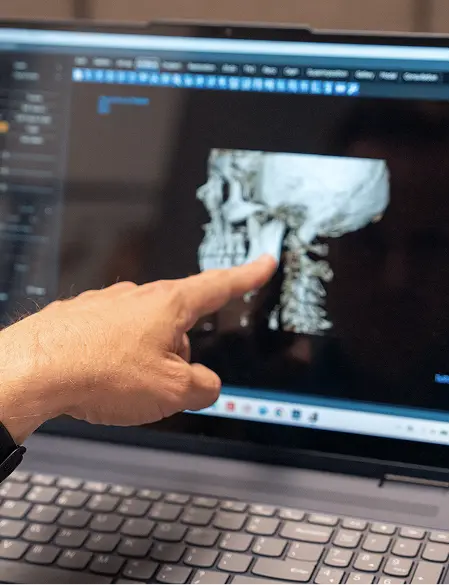
You don’t need to decide whether your headaches are coming from your jaw, whether clicking means your joint is damaged, whether facial pain is muscular or neurological, or whether an oral appliance will work for your sleep apnea. Those are diagnostic questions. Dr. Jergensen begins with your history, your symptoms, and what you have already tried. Depending on your condition, the comprehensive examination may include CBCT 3D imaging to evaluate structural anatomy, Joint Vibration Analysis to assess joint function, acoustic pharyngometry to measure airway dimensions, and motor nerve reflex testing to gather neuromuscular information. The technology is not there to make the examination more complicated. It is there to replace assumptions with objective information wherever possible.
You Have Tried Enough Things. Start By Finding Out What Is Actually Happening.
If jaw pain is changing what you eat, headaches are controlling your schedule, facial symptoms have left you searching for explanations, or sleep apnea treatment is not working in the real world, the next step does not have to be another attempt at treating the symptom.
Your comprehensive exam is designed to investigate what may be contributing to your condition, review the findings with you, and determine what treatment options make sense based on your diagnosis.
The next step should not be another guess. It should be an answer.
- Credited toward treatment when you start within 7 days
- Refunded if Dr. Jergensen can’t help you
- Financing available