
What If the Place You Feel the Pain Is Not Where the Problem Begins?
Headaches, facial pain, pressure, numbness, and nerve-like symptoms can have many causes. When the usual answers have not helped, it may be time to investigate what else could be contributing.
Patients with persistent headaches and facial pain often arrive at the TMJ & Sleep Therapy Centre of Temecula after a long search for answers. They may have seen dentists, neurologists, ENTs, chiropractors, physical therapists, pain specialists, or other providers. They may have tried medication, Botox, injections, physical therapy, or other treatments with temporary, incomplete, or little improvement.
Dr. Nathan Jergensen does not assume that every headache or facial pain condition comes from the jaw. He evaluates whether the jaw joints, muscles, nerves, bite, airway, or surrounding craniofacial structures may be contributing to the symptoms, then builds treatment around what the examination actually reveals.
The $400 Comprehensive Exam
About 60 minutes with Dr. Jergensen. Diagnosis and complete treatment plan at your first visit.
- Credited toward treatment when you start within 7 days
- Refunded if Dr. Jergensen can’t help you
- CBCT 3D imaging, joint vibration analysis, airway measurement and more, as your condition calls for
Mon–Fri 8:00am – 4:30pm · or request online
The Hardest Part Is Sometimes Not the Pain. It Is Not Knowing Why You Have It.
When pain persists long enough, life begins to organize itself around it. You think about what you can eat, whether a headache will derail the workday, whether touching one area of your face will trigger symptoms, or whether tomorrow will be a good day or a bad one.
That uncertainty can become even more frustrating when examinations and tests have not produced an explanation that matches what you are experiencing. Normal findings in one area do not mean your symptoms are not real. They may simply mean the investigation needs to continue.
The objective of Dr. Jergensen’s evaluation is to determine whether structures within his area of expertise can help explain some part of the problem and, just as importantly, recognize when they cannot.
Not Every Headache Comes From the Jaw. Some May Have a Jaw Component That Has Been Missed.
The temporomandibular joints and the muscles responsible for chewing occupy the same general region where many patients experience headaches, facial tension, and discomfort around the temples. When those structures are irritated or functioning abnormally, they may contribute to symptoms that patients experience primarily as a headache rather than as obvious jaw pain.
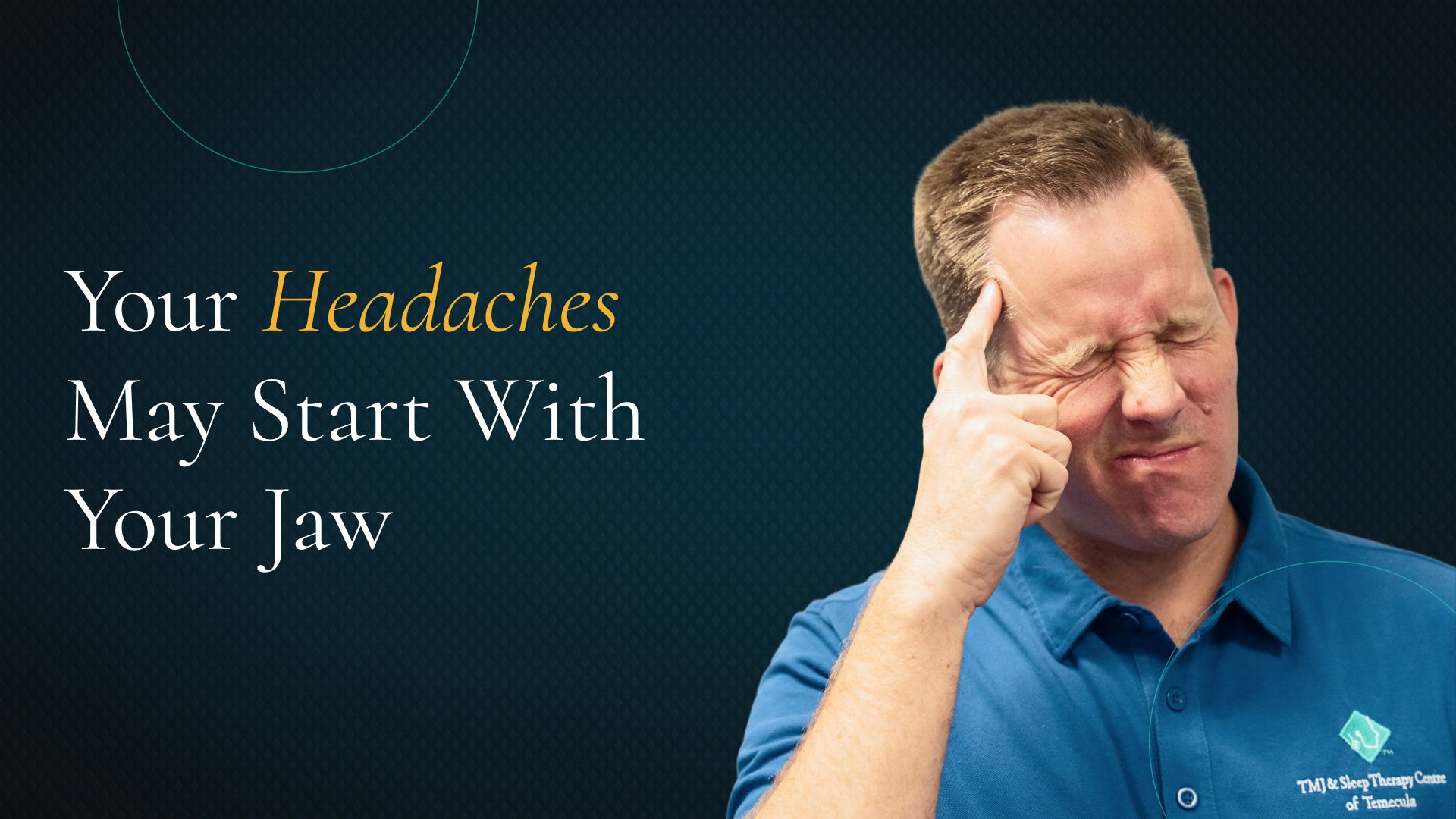
Your Headaches May Start With Your Jaw
That possibility becomes particularly relevant when headaches occur alongside clenching, jaw soreness, clicking or popping, facial fatigue, neck tension, pain while chewing, or symptoms that are worse upon waking.
Dr. Jergensen’s job is not to rename every headache a TMJ disorder. It is to determine whether the jaw and surrounding structures are part of the clinical picture.
When Your Face Hurts but Your Teeth Look Fine, Keep Looking.
Facial pain can be difficult to localize. It may be felt around the cheek, temple, jaw, ear, teeth, or other areas of the face. Some patients describe aching or pressure. Others experience burning, tingling, numbness, sensitivity, or pain that seems to move.
Because several structures and systems occupy a relatively small anatomical area, similar symptoms can come from very different conditions. Dr. Jergensen evaluates the jaw joints, muscles, nerves, bite, and surrounding craniofacial structures to determine whether there are findings that help explain the patient’s pain.
If the examination indicates that another specialty is better suited to the condition, that information is valuable too. The goal is an appropriate diagnosis, not forcing every symptom into a TMJ explanation.
Severe Facial Pain Deserves More Than Another Guess.
Nerve-related facial pain can feel very different from ordinary muscular soreness. Patients may describe electric or shock-like sensations, burning, stabbing pain, extreme sensitivity, numbness, tingling, or symptoms triggered by touching the face, chewing, speaking, or other everyday activities.
Trigeminal neuralgia and other neurological pain conditions can be complex and may require care from multiple disciplines. Dr. Jergensen does not assume that trigeminal neuralgia is caused by a TMJ disorder. His role is to investigate whether jaw, muscular, structural, or other craniofacial findings may be relevant to the patient’s presentation and determine whether treatment within his scope or collaboration with another provider is appropriate.

Relief Is Important. So Is Understanding Why the Pain Keeps Coming Back.
Medication can reduce pain. Botox can reduce muscle activity. Physical therapy can improve movement and muscular function. Chiropractic care, injections, and other therapies may also have appropriate roles. If one of these approaches helped you, that response can provide useful information.
But when relief repeatedly disappears, it may be worth asking whether the treatment addressed the primary condition or one consequence of it.
Dr. Jergensen uses your response to previous treatment as part of the diagnostic process. The goal is not to dismiss what you have already tried. It is to understand what those experiences can tell us about what should be investigated next.
Your Jaw, Face, Head, and Neck Do Not Function in Isolation.
The temporomandibular joints work alongside the muscles that move the jaw and other structures throughout the head and neck. When a TMJ disorder is present, symptoms may not remain neatly confined to the joint itself.
That is one reason a patient can have significant headaches or facial pain without initially thinking of the jaw as part of the problem. Conversely, experiencing pain near the jaw does not automatically mean the TMJ is responsible.
A comprehensive evaluation helps distinguish between those possibilities rather than relying on the location of the pain alone.
Before We Decide How to Treat the Pain, We Need to Understand the Pattern.
Dr. Jergensen begins by listening closely to the history of the condition: where the pain occurs, what it feels like, what triggers it, when it began, what other symptoms accompany it, and how it has responded to previous treatment.
The clinical examination then evaluates the jaw joints, muscles, bite, movement, nerves, and other relevant craniofacial structures. Depending on the presentation, objective diagnostic technology may also be used to evaluate joint structure and function, airway considerations, or neuromuscular findings.
The objective is not simply to document that you hurt. It is to identify findings that can help explain why.
Different Pain Patterns Require Different Treatment Plans.
Treatment depends entirely on what the examination identifies. If a TMJ disorder is contributing to the symptoms, treatment may involve therapeutic orthotic therapy designed around the patient’s diagnosis. If muscular dysfunction is significant, targeted muscle therapies or rehabilitation may be incorporated. Other patients may benefit from nerve blocks, trigger-point treatment, dry needling, regenerative or adjunctive therapies, or collaboration with another healthcare provider.
Not every patient needs an appliance. Not every patient needs an injection. And not every facial pain condition belongs in a TMJ practice.
The purpose of diagnosis is to make those distinctions before treatment begins.
Sometimes the Right Answer Is More Than One Provider.
Persistent headache and facial pain can cross the boundaries between dentistry, neurology, pain medicine, physical therapy, ENT care, sleep medicine, and other specialties. For complex cases, expecting one provider to address every contributing factor may not be realistic.
When appropriate, Dr. Jergensen works collaboratively with other healthcare professionals so the portion of the condition related to the jaw and craniofacial system can be addressed alongside other necessary care.
The objective is not to keep every patient inside one practice. It is to help the patient get to the right care.
You Know Where It Hurts. Now Find Out What May Be Making It Hurt.
If headaches or facial pain have become part of your daily life, particularly after you have already tried multiple treatments, another attempt at suppressing the symptom may not answer the question that brought you here.
Dr. Jergensen’s comprehensive examination is designed to investigate whether the jaw joints, muscles, nerves, bite, or surrounding craniofacial structures may be contributing to your condition. If they are, you will understand what he found and what treatment he recommends. If the findings point elsewhere, that matters too.
The goal is not another guess. It is a clearer understanding of what comes next.
- Credited toward treatment when you start within 7 days
- Refunded if Dr. Jergensen can’t help you
- Financing available