Jaw Pain. Headaches. Clicking. Facial Pain. The Right Treatment Starts With the Right Diagnosis.
If you have already tried a nightguard, physical therapy, Botox, medication, injections, or other treatments without lasting improvement, the problem may not be a lack of treatment. It may be that the full condition has not yet been identified.
Dr. Nathan Jergensen specializes in diagnosing and treating TMJ disorders and orofacial pain, particularly in patients who have already been through multiple approaches without a clear or lasting answer. At the TMJ & Sleep Therapy Centre of Temecula, treatment does not begin with a standard appliance or a predetermined protocol. It begins by understanding your jaw joints, muscles, bite, airway, nerves, craniofacial structures, symptoms, and treatment history together.
Because two people with similar symptoms can have very different clinical findings, the treatment should be built around the diagnosis, not simply the name of the symptom.
Your Jaw Does Not Have to Hurt All the Time for Something to Be Wrong.
TMJ disorders and orofacial pain can present in ways that are obvious, subtle, or surprisingly far from the jaw itself. Some patients experience constant pain. Others notice symptoms only when chewing, waking in the morning, opening wide, or going through periods of increased tension. The symptoms can also change over time.
Common concerns include jaw pain or soreness, clicking and popping, catching or locking, difficulty opening wide, headaches around the temples or behind the eyes, facial pain or fatigue, ear pain, tinnitus, neck tension, changes in the bite, and discomfort while chewing. Some patients experience several of these symptoms at once. Others have one persistent problem that no one has been able to explain.
If you recognize yourself in that list, the next question is not simply how to make the symptom stop. It is why it is happening.
If You Have Tried Everything, We Want to Know What “Everything” Was.
Another Treatment Is Only Valuable if There Is a Reason to Believe It Is Treating the Right Problem.
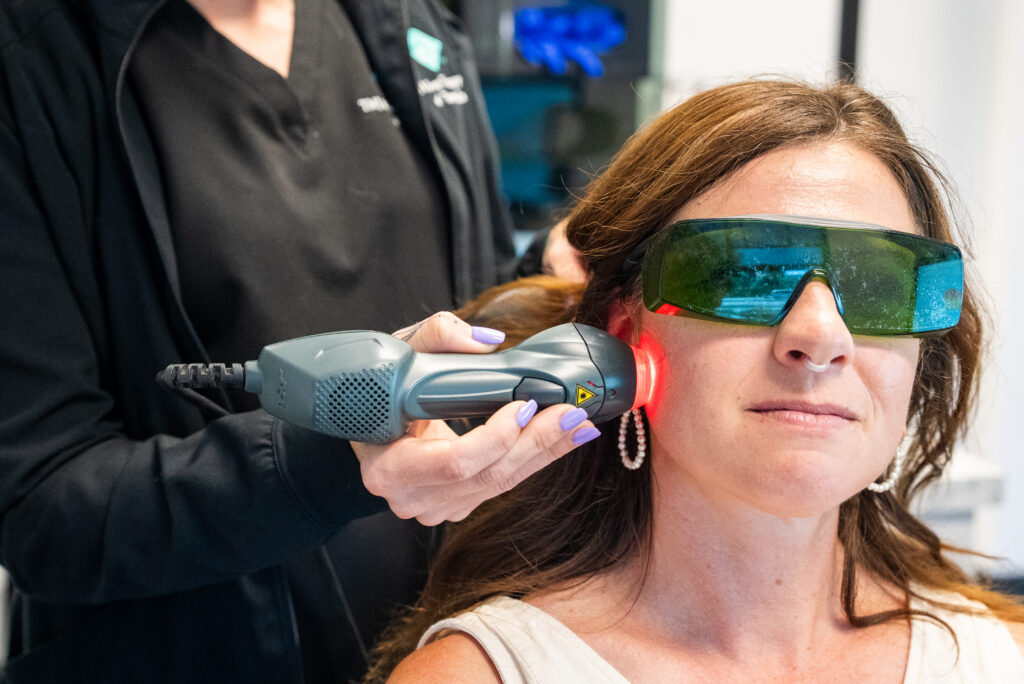
Many patients arrive after trying a nightguard, physical therapy, chiropractic care, Botox, medication, steroid injections, pain management, or some combination of them. These treatments are not inherently wrong. Each can have an appropriate role depending on the condition being treated.
The problem is that reducing a symptom does not necessarily explain why the symptom developed. A nightguard may protect teeth from grinding without telling you what is happening inside the jaw joint. Botox may reduce muscle activity without determining why those muscles are working so hard. Physical therapy may improve mobility while an underlying joint problem remains.
If a treatment helped temporarily, that matters. If it did nothing, that matters too. Dr. Jergensen uses your response to previous treatment as part of the diagnostic story rather than simply asking you to start over with something new.
We Do Not Treat “TMJ.” We Treat What We Find.
“TMJ” is commonly used as a catch-all term for jaw problems, but patients can have very different conditions involving the temporomandibular joints, discs, muscles, bite, nerves, airway, or surrounding structures. That distinction matters because the same treatment should not automatically be prescribed for every patient with jaw pain.
Dr. Jergensen’s first priority is therefore diagnosis. Your history and clinical examination are combined with objective diagnostic information to understand what is happening structurally and functionally. Only then does treatment planning begin.
This is the central difference in the approach: diagnose first, treat second, and measure what happens next.
What Can We See That May Not Have Been Looked At Before?
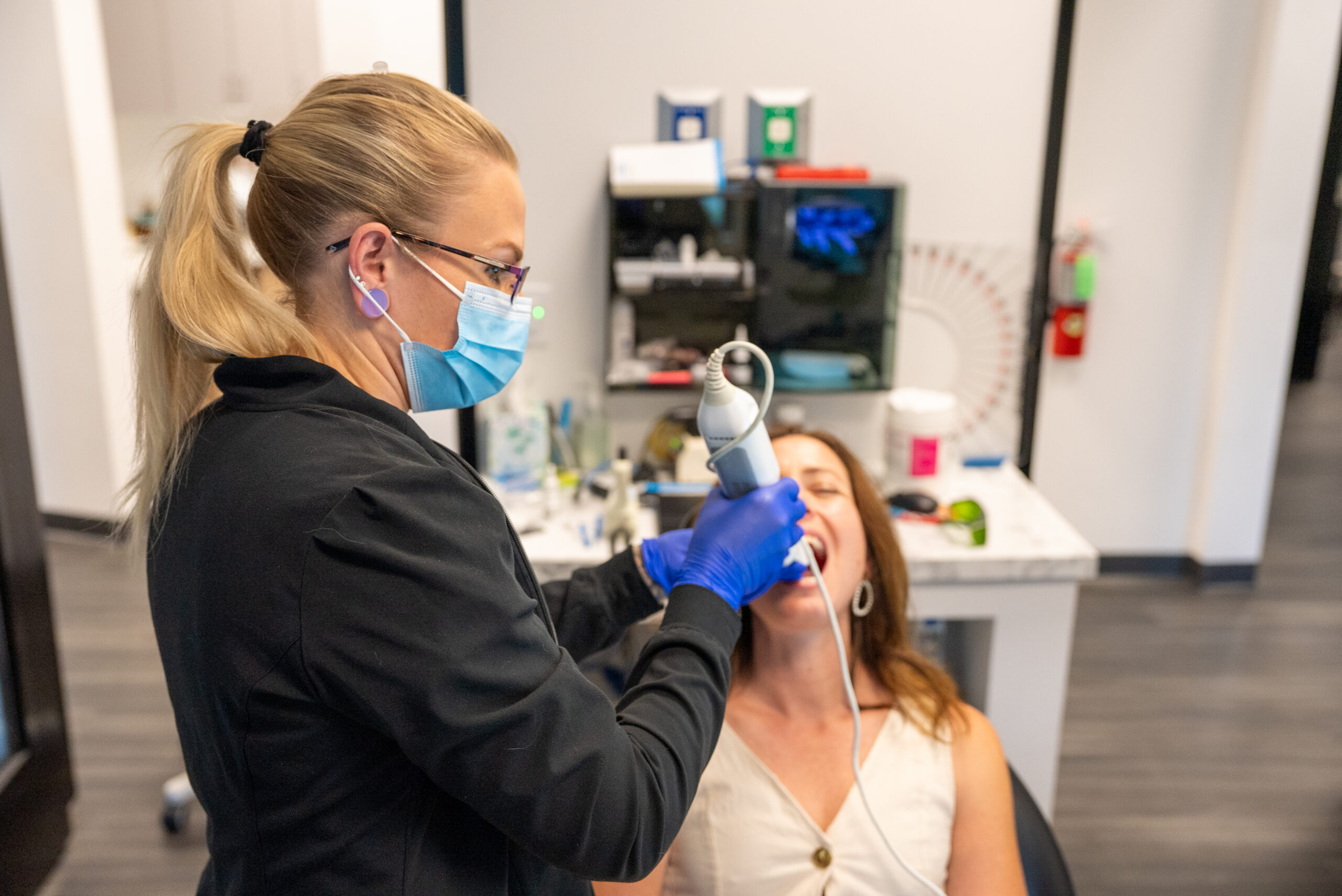
A traditional dental examination can provide important information, but complex TMJ and orofacial pain cases may require a closer look at structures and functions that are not adequately evaluated through a visual examination alone. Depending on your condition, Dr. Jergensen’s comprehensive diagnostic process may incorporate CBCT 3D imaging, Joint Vibration Analysis, acoustic pharyngometry, and motor nerve reflex testing.
CBCT 3D Imaging
CBCT provides three-dimensional imaging of the jaw joints, skeletal anatomy, airway, and surrounding craniofacial structures. This allows Dr. Jergensen to evaluate structural findings within the TMJs and understand how the joints relate to the rest of the craniofacial system.
Joint Vibration Analysis
Joint Vibration Analysis, or JVA, measures vibrations produced by the jaw joints during movement. Rather than simply noting that a jaw clicks or pops, JVA provides objective information that can help characterize joint function.
Acoustic Pharyngometry
Acoustic pharyngometry measures airway dimensions and how they may change with jaw position. Because pain, jaw function, and airway concerns can overlap in some patients, understanding the airway can provide another important part of the clinical picture.
Motor Nerve Reflex Testing
Motor nerve reflex testing provides information about neuromuscular function and establishes objective measurements that can be used during diagnosis and compared as treatment progresses.
Treatment Is Built Around What the Examination Finds.
Once Dr. Jergensen has established a diagnosis, he develops a treatment plan around the specific structures and contributing factors identified during the examination. For many TMJ and orofacial pain patients, treatment may include a precision-fabricated orthotic designed to change how the jaw is positioned and functionally supported while the joints and surrounding tissues recover.
Depending on the diagnosis, treatment may also incorporate muscle rehabilitation, physical therapy, airway management, nutritional support, regenerative or adjunctive therapies, or collaboration with other healthcare providers. Not every patient needs every treatment, and the objective is not to keep adding therapies. It is to use the appropriate tools for the condition that was actually identified.

A TMJ Orthotic Is Not Just Another Nightguard.
A conventional nightguard is commonly designed to protect the teeth from the effects of grinding or clenching. A therapeutic TMJ orthotic has a different purpose. It is precision-fabricated around the patient’s diagnosis and designed to support a therapeutic jaw position based on what Dr. Jergensen finds during the examination.
Depending on the patient’s condition, different appliances may be used during the day, at night, or at different stages of treatment. The objective is not simply to put something between the teeth. It is to support the jaw in a way that reduces stress on affected structures and creates an environment in which recovery can occur.
The Goal Is Active Recovery, Not Indefinite Symptom Management.
Treatment is designed as a process with measurable progress, not an open-ended series of appointments. After treatment begins, Dr. Jergensen monitors symptoms, function, and objective findings to determine how the patient is responding and whether adjustments are needed.
Many patients report noticeable improvement within approximately two to four weeks, although individual experiences and timelines vary. The broader treatment process often works toward maximum medical improvement around the 12-week mark, depending on the diagnosis, severity of the condition, and individual response.
The important distinction is that treatment has a direction. Examine. Diagnose. Treat. Measure. Adjust when necessary. Continue until the patient reaches the appropriate endpoint for their condition.
Surgery Should Not Be the First Answer to a Problem We Have Not Fully Understood.
Dr. Jergensen’s treatment philosophy is non-surgical whenever clinically appropriate. For many TMJ and orofacial pain conditions, conservative therapies can be used to stabilize the system, reduce stress on affected structures, improve function, and evaluate how the patient responds before more invasive options are considered.
That does not mean surgery is never appropriate. It means an irreversible intervention should not be the default simply because other approaches have failed. When surgical evaluation or another specialty is warranted, Dr. Jergensen can help identify that need and collaborate with the appropriate provider.
Complex Problems Rarely Respect the Boundaries Between Specialties.
TMJ and orofacial pain can involve structures and systems that overlap in dentistry, medicine, physical therapy, neurology, sleep medicine, ENT care, orthodontics, and other disciplines. Some patients therefore benefit from more than one provider participating in their recovery.
When appropriate, Dr. Jergensen works collaboratively with other healthcare professionals rather than trying to make every aspect of a complex condition fit within one specialty. The goal is not to own every part of your care. It is to understand which parts belong here, which may require another provider, and how those pieces should work together.
You Have Already Tried Treating the Pain. Now Find Out Why It Keeps Coming Back.
If jaw pain, headaches, clicking, locking, facial pain, or other symptoms have continued despite previous treatment, another generic solution is unlikely to answer the question you are still asking.
Your comprehensive exam is approximately 60 minutes and is designed to evaluate your history, jaw joints, muscles, bite, airway, craniofacial structures, and other relevant findings. The goal is to give you a diagnosis and complete treatment plan during that first visit so you understand what Dr. Jergensen found and what he recommends doing next.
- Credited toward treatment when you start within 7 days
- Refunded if Dr. Jergensen can’t help you
- Financing available