
A TMJ Orthotic Is Not Just Another Nightguard.
If you already have a nightguard and your jaw still hurts, the answer may not be another piece of plastic. It may be an appliance designed for an entirely different purpose.
A conventional nightguard is generally designed to protect your teeth from the effects of grinding and clenching. A therapeutic TMJ orthotic is different. It is prescribed based on your diagnosis and precision-fabricated to support a specific therapeutic jaw position.
At the TMJ & Sleep Therapy Centre of Temecula, Dr. Nathan Jergensen does not begin with an appliance and work backward. He first evaluates the jaw joints, muscles, bite, airway, and other relevant structures to determine what is happening. If orthotic therapy is appropriate, the appliance is then designed around what your examination reveals.

Protecting Your Teeth and Treating Your Jaw Are Not the Same Thing.
If you grind or clench your teeth, a nightguard can provide an important protective barrier between them. But protecting the teeth does not necessarily change what is happening within the jaw joints or explain why the muscles are working the way they are.
That distinction becomes particularly important for patients who say, “I already have a nightguard.” Many have worn one faithfully for months or years and still wake with jaw soreness, headaches, facial tension, or other symptoms. The appliance may be doing exactly what it was designed to do while never having been intended to address the condition causing those symptoms.
A therapeutic orthotic begins with a different question. Instead of asking only how to protect the teeth, Dr. Jergensen asks what position and support the jaw requires based on the patient’s diagnosis.
The Appliance Should Fit the Diagnosis, Not the Other Way Around.
Jaw pain does not have one cause, which means there should not be one standard appliance for every patient who walks through the door. One person may have findings involving the joint itself. Another may have significant muscular involvement. Another may have structural changes, airway concerns, or several factors occurring together.
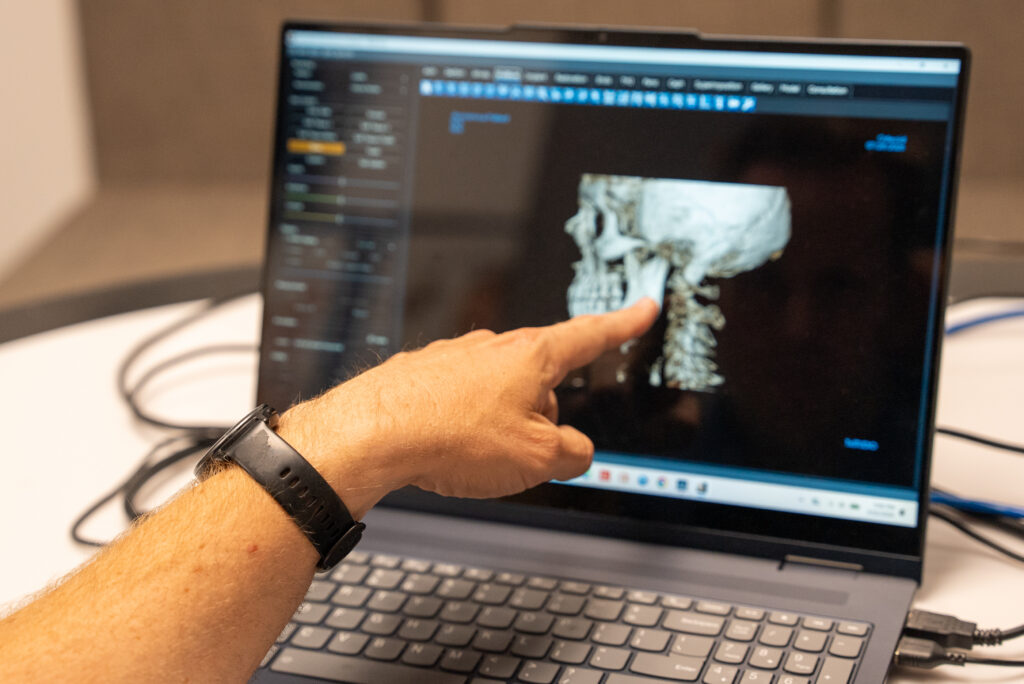
Before prescribing an orthotic, Dr. Jergensen performs a comprehensive examination to understand those differences. Depending on the patient’s condition, the diagnostic process may include CBCT 3D imaging, Joint Vibration Analysis, acoustic pharyngometry, motor nerve reflex testing, and a detailed clinical examination.
Those findings help determine whether an orthotic is appropriate and, if it is, how the appliance should be designed.
The Goal Is Not Simply to Stop Your Teeth From Touching.
A therapeutic orthotic is designed to support the jaw in a position selected according to the patient’s clinical findings. Depending on the diagnosis, this can be used as part of a treatment strategy intended to reduce stress on affected structures, improve function, and create more favorable conditions for recovery.
The appliance is custom fabricated rather than selected from an off-the-shelf design. Dr. Jergensen then monitors how the patient responds and makes adjustments when necessary as treatment progresses.
Orthotic therapy is therefore not simply the delivery of a device. The appliance is one component of an active treatment process that begins with diagnosis and continues through monitoring, adjustment, and reevaluation.
Your Jaw Does Not Function the Same Way Awake and Asleep.
Depending on the diagnosis, different orthotic strategies may be appropriate during different parts of the day. Some patients may require an appliance designed for daytime function, another approach during sleep, or changes in appliance use as treatment progresses.
The appropriate design and schedule depend on what Dr. Jergensen identifies during the examination. Rather than prescribing the same appliance to every TMJ patient, orthotic therapy is selected and managed according to the patient’s specific condition and response to treatment.
Custom Should Mean More Than Taking an Impression of Your Teeth.
A truly individualized orthotic requires more than simply making an appliance that physically fits inside your mouth. The fit matters, but so does the therapeutic position the appliance is intended to support.
Dr. Jergensen uses the information gathered during your examination to establish the specifications for the orthotic. The device is then precision-fabricated to those specifications. Once delivered, its effectiveness is evaluated through your symptoms, function, clinical findings, and progress over time.
The objective is not to make a mouthguard that fits your teeth. It is to create a therapeutic device that fits the treatment plan.

The Orthotic Is the Beginning of Treatment, Not the End of the Appointment.
After your orthotic is delivered, Dr. Jergensen monitors how your jaw and symptoms respond. Follow-up visits allow him to evaluate progress, make adjustments to the appliance when necessary, and determine whether additional therapies should be incorporated based on your diagnosis.
Depending on the condition, treatment may also involve muscle rehabilitation, physical therapy, airway management, nutritional support, regenerative or adjunctive therapies, or collaboration with another healthcare provider. Not every patient requires these additional treatments. They are used when the diagnosis and response to care indicate that they may be beneficial.
Many patients report noticeable improvement within approximately two to four weeks, although individual experiences vary. Treatment commonly works toward maximum medical improvement around the 12-week mark, depending on the diagnosis, severity of the condition, and response to care.
Feeling Better Matters. So Does Knowing What Changed.
Symptom improvement is important, but Dr. Jergensen also wants to understand how the underlying system is responding. The same clinical and diagnostic information used to establish a baseline can help evaluate progress as treatment continues.
That creates a treatment process with a defined direction: establish where you started, introduce the appropriate therapy, evaluate the response, adjust when necessary, and continue toward the appropriate endpoint for your condition.
The goal is not indefinite appliance therapy. It is active recovery with progress that can be evaluated along the way.
Especially If You Have Already Tried a Nightguard.
Orthotic therapy may be considered for patients experiencing jaw pain, clicking or popping, locking or catching, headaches associated with TMJ symptoms, facial pain, muscle tension, difficulty chewing, morning jaw soreness, or other symptoms associated with a diagnosed TMJ or orofacial pain condition.
It may be particularly worth investigating if you have already worn a conventional nightguard and continue to experience symptoms. That does not necessarily mean the nightguard failed. It may mean the appliance was designed to solve a different problem.
The only way to know whether a therapeutic orthotic is appropriate is to first understand what is happening with your jaw.
Before You Try Another Appliance, Find Out What the Appliance Needs to Do.
If you already own a nightguard, have tried multiple appliances, or have been told that you simply need to stop clenching, another generic solution may not move you any closer to understanding why your symptoms continue.
Dr. Jergensen begins with a comprehensive examination and diagnosis. If orthotic therapy is appropriate, your appliance is then designed around those findings and incorporated into a treatment process in which your progress can be monitored and the plan adjusted as your condition improves.
The first step is not choosing an orthotic. It is finding out whether you need one.
- Credited toward treatment when you start within 7 days
- Refunded if Dr. Jergensen can’t help you
- Financing available