The Symptom Is Where the Investigation Starts. Not Where It Ends.
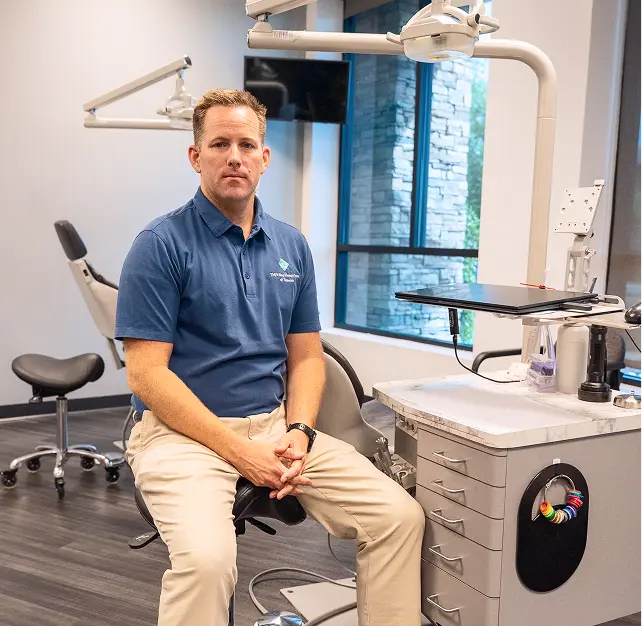
Dr. Nathan Jergensen provides diagnostic evaluation and co-management for patients with TMJ disorders, orofacial pain, craniofacial pain, sleep-disordered breathing, and complex cases requiring interdisciplinary care.
Patients with TMJ disorders, facial pain, headaches, and sleep-related breathing concerns rarely fit neatly within the boundaries of a single discipline.
A patient may present to the dentist with jaw pain, the neurologist with headaches, the physical therapist with neck tension, or the sleep physician with CPAP intolerance while several of those symptoms are occurring at the same time.
Dr. Nathan Jergensen works with referring providers to evaluate the TMJs, craniofacial structures, muscles, airway, and other relevant systems, establish a diagnosis within his scope, and communicate findings back to the patient’s healthcare team. The goal is not to replace the referring provider. It is to provide another piece of the clinical picture and help move a complex patient forward.
The Patient Has Symptoms. You Need Better Information About What Is Driving Them.
A referral may be appropriate when a patient presents with persistent jaw pain, clicking or locking, headaches associated with jaw symptoms, facial or myofascial pain, unexplained bite changes, suspected TMJ degeneration, post-surgical jaw pain, or overlapping pain and sleep concerns.
Dr. Jergensen also evaluates patients with diagnosed obstructive sleep apnea who are unable to tolerate CPAP and may be candidates for oral appliance therapy, including patients whose jaw health or craniofacial anatomy requires additional consideration before an appliance is prescribed.
Referral does not automatically mean treatment. The first objective is to determine what the diagnostic findings show and whether Dr. Jergensen’s care is appropriate for that patient.
Objective Data for Cases That Need More Than a Symptom-Based Diagnosis.
Dr. Jergensen’s evaluation combines clinical examination with diagnostic technologies selected according to the patient’s presentation. CBCT 3D imaging provides information about TMJ and craniofacial anatomy. Joint Vibration Analysis provides objective data about joint function during movement. Acoustic pharyngometry evaluates airway dimensions and changes associated with jaw position, while motor nerve reflex testing provides additional neuromuscular information.
These findings are interpreted alongside the patient’s history, symptoms, physical examination, previous treatment, and other available records. The objective is not to accumulate testing. It is to gather information that helps clarify the diagnosis and treatment strategy.
A Diagnostic and Treatment Philosophy Built Around the Entire Craniofacial System.
Dr. Jergensen is a TSTCI Certified Specialist and has completed advanced training in protocols developed by Dr. Steven R. Olmos for the diagnosis and treatment of craniofacial pain and sleep-disordered breathing.
His approach evaluates the relationships between the TMJs, muscles, bite, airway, nerves, and surrounding structures rather than isolating the patient’s primary complaint from the rest of the craniofacial system. Treatment is then selected according to the diagnosis and monitored through clinical response and objective findings. This is particularly relevant for patients whose symptoms cross conventional specialty boundaries or whose previous treatment has addressed individual symptoms without resolving the broader clinical picture.
When “TMJ” Is Not Specific Enough to Guide Treatment.
Jaw pain can reflect different joint, muscular, structural, or functional conditions. Similarly, headaches and facial pain may or may not have a meaningful TMJ component. Dr. Jergensen evaluates these distinctions before determining whether orthotic therapy, adjunctive care, rehabilitation, monitoring, or another referral is appropriate.
Potential referral categories include TMJ pain and dysfunction, clicking or locking, craniofacial and myofascial pain, headache presentations with suspected jaw involvement, structural joint changes, unexplained bite changes, and complex facial pain cases in which the TMJs and surrounding structures have not been adequately evaluated.
A Dental Sleep Medicine Option for Patients Who Cannot Consistently Use CPAP.
For patients with diagnosed obstructive sleep apnea who cannot tolerate CPAP, Dr. Jergensen evaluates candidacy for custom oral appliance therapy. His assessment considers the patient’s airway, dentition, bite, TMJs, anatomy, treatment history, and relevant sleep information before an appliance is prescribed. Acoustic pharyngometry can provide additional information about airway dimensions and the response to changes in mandibular position. Depending on the case, oral appliance therapy may be considered as an alternative treatment pathway or as part of a combination strategy alongside PAP therapy. Because obstructive sleep apnea is a medical condition, dental treatment is approached as part of the patient’s broader sleep care rather than as an isolated dental procedure.
The Appliance Is Selected After the Diagnosis Is Established.
When orthotic therapy is indicated, appliance selection and therapeutic positioning are based on the patient’s diagnostic findings rather than a single appliance protocol for every TMJ presentation.
Different orthotic classifications and strategies may be appropriate depending on joint condition, muscular involvement, airway considerations, daytime versus nighttime function, and the objectives of treatment. Dr. Jergensen monitors the patient’s response throughout therapy and modifies the plan as necessary as the patient progresses toward maximum medical improvement.
Additional Tools When the Diagnosis Calls for Them.
Depending on the clinical presentation, Dr. Jergensen may incorporate adjunctive therapies alongside primary TMJ or orofacial pain treatment.
These may include targeted muscular therapies, dry needling, steroid-free trigger point injections (aka wet needling), sphenocath, proliferative therapy (prolotherapy), I-PRF, phonophoresis (ultrasound), frenectomy, myofunctional therapy, physical therapy, traumalase/oralase, massage therapy, and other treatments selected according to the structures involved.
The objective is not to layer procedures onto every case. Adjunctive treatment is used when a specific clinical finding or response to care provides a reason for adding it.
Refer the Patient Without Losing the Patient.
A referral to Dr. Jergensen is not intended to interrupt the relationship between a patient and their existing dentist, physician, orthodontist, sleep provider, physical therapist, or other healthcare professional.
His role is to evaluate and manage the portion of the case that falls within his expertise, communicate relevant findings, and coordinate when the patient’s condition overlaps with other areas of care.
When the patient reaches the appropriate endpoint of treatment, the referring provider should understand what was found, what was done, and what considerations may remain relevant to future care. Interdisciplinary treatment works best when every provider understands their role and the patient is not left trying to connect the pieces themselves.
Close the Loop.
Complex referrals become more difficult when information disappears between offices. Dr. Jergensen’s goal is to provide referring providers with clinically useful communication about diagnostic findings, treatment recommendations, progress, and outcomes when appropriate.
For cases requiring multiple disciplines, provider-to-provider communication can also help determine treatment sequencing and prevent one part of the patient’s care from unintentionally working against another.
The objective is simple: the patient should experience a coordinated healthcare team, not a collection of disconnected appointments.
Better Collaboration Starts Before the Referral.
The Temecula Interdisciplinary Study Club brings local healthcare professionals together to examine the kinds of complex cases that benefit from communication across disciplines. The goal is to create stronger clinical relationships between providers, expand understanding of how different specialties approach overlapping conditions, and ultimately make interdisciplinary care easier for patients.
For providers who want to better understand Dr. Jergensen’s diagnostic approach, discuss cases, or build relationships with other clinicians in the Temecula area, the study club provides an opportunity to continue that conversation outside the treatment room.

Refer the Patient Without Losing the Patient.
Send the case here. Our team contacts the patient, schedules the comprehensive exam, and you receive diagnostic findings, a written case report, progress updates and outcome documentation.
- Patient contacted promptly
- Findings and treatment plan sent back to you
- Fax records to (951) 309-2920
Refer a Patient or Ask About a Case
Our team contacts the patient to schedule and sends you findings after the exam.
Have a Patient Who Does Not Fit Neatly Into One Box? Let’s Talk About the Case.
If a patient has persistent TMJ symptoms, complex orofacial pain, suspected craniofacial involvement, overlapping pain and sleep concerns, or diagnosed sleep apnea with CPAP intolerance, Dr. Jergensen can provide an additional diagnostic perspective and determine whether treatment within his scope is appropriate.
The goal of the referral is not to take over the patient’s care. It is to answer the questions that fall within Dr. Jergensen’s expertise, communicate those findings, and help the patient and their healthcare team determine what should happen next.
- Credited toward treatment when you start within 7 days
- Refunded if Dr. Jergensen can’t help you
- Financing available